Find this useful? Share the visual.
The Short Version
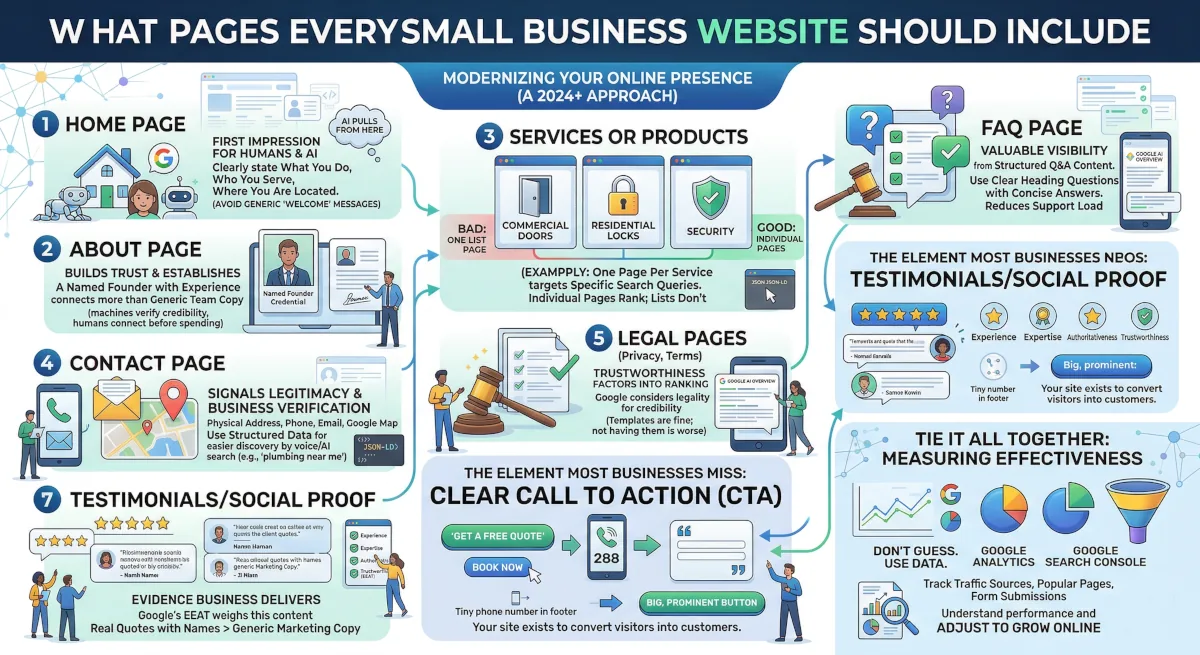
The core pages still hold up. Having them is not the point. Each page has a specific job in how people and search engines find and evaluate your business. AI systems like Perplexity and Google AI Overviews pull directly from FAQ pages and structured data, so the format you choose now shapes whether you get cited later.
The core pages still hold up: Home, About, Services/Products, Contact. But having them isn't the point. Each page has a specific job in how people and search engines find and evaluate your business.
Home Page
Your home page is the first impression for both humans and search crawlers. Google and AI systems like ChatGPT, Perplexity, and Gemini pull from it to understand what your business does and where you operate. If it just says "Welcome to Our Company" with no specifics, you're invisible to the systems sending people your way. State what you do, who you serve, and where you're located. Clearly.
About Page
Your about page builds trust, but it also tells search engines and AI systems who is behind the business. A named founder with real experience gets cited differently than a generic "our team is passionate" paragraph. This is where you establish credibility that machines can verify and humans can connect with.
Services or Products Pages
Each service should have its own dedicated page, not a single bullet inside a "Services" list. Each one targets a different search query. Someone looking for "commercial door access installation in Phoenix" won't find you on a generic "Our Services" rollup. Standalone pages rank where lists don't.
Contact Page
The contact page does more than hold your phone number. It signals legitimacy to Google's business verification. Include your physical address, phone, email, and embed a Google Map if you have a location. If you format your business details using structured data, which is a standardized format that crawlers and AI systems can read directly, you're more likely to show up when someone asks "who does plumbing near me" or "best electrician in Dallas."
Legal Pages
Privacy Policy and Terms of Service aren't just compliance checkboxes. Google has stated that trustworthiness factors into ranking. A site without basic legal pages looks less established than one with them. Templates are fine. Not having them is worse.
FAQ Page
This is one most businesses skip, and it's become one of the most valuable for visibility. AI systems like Google's AI Overviews, ChatGPT, and Perplexity pull directly from structured Q&A content. A clear question as a heading with a concise answer underneath is the format these systems prefer to cite. It also reduces your support load by addressing what your customers ask repeatedly.
Testimonials or Social Proof
Google's EEAT framework (Experience, Expertise, Authoritativeness, Trustworthiness) weighs this content when deciding how to rank you. A few real client quotes with names and context do more for your credibility than any marketing copy on your home page.
The Element Most Businesses Miss
A clear call to action. Whether it's a booking form, a quote request, or a prominent phone number, you need at least one page or persistent element that makes it obvious how to buy from you or schedule your service. Your site exists to convert visitors into customers. Make the path obvious.
Measuring Effectiveness
Having these pages is step one. Knowing whether they work is step two, and most businesses skip it entirely. If you're not tracking which pages bring traffic, which ones people leave from, and whether your contact form gets submissions, you're guessing. Free tools like Google Analytics and Google Search Console show you where people come from and what they do on your site.
By the Numbers
72% of first-page Google results use schema markup on their pages
SE Ranking / HTTP Archive Web Almanac, 2024
94% of all web pages receive zero traffic from Google
Ahrefs Content Study, 2024

Written by Duane Grey
AI Strategy & Implementation
Independent AI consultant helping companies cut through hype and deploy systems that produce real results.