Find this useful? Share the visual.
The Short Version
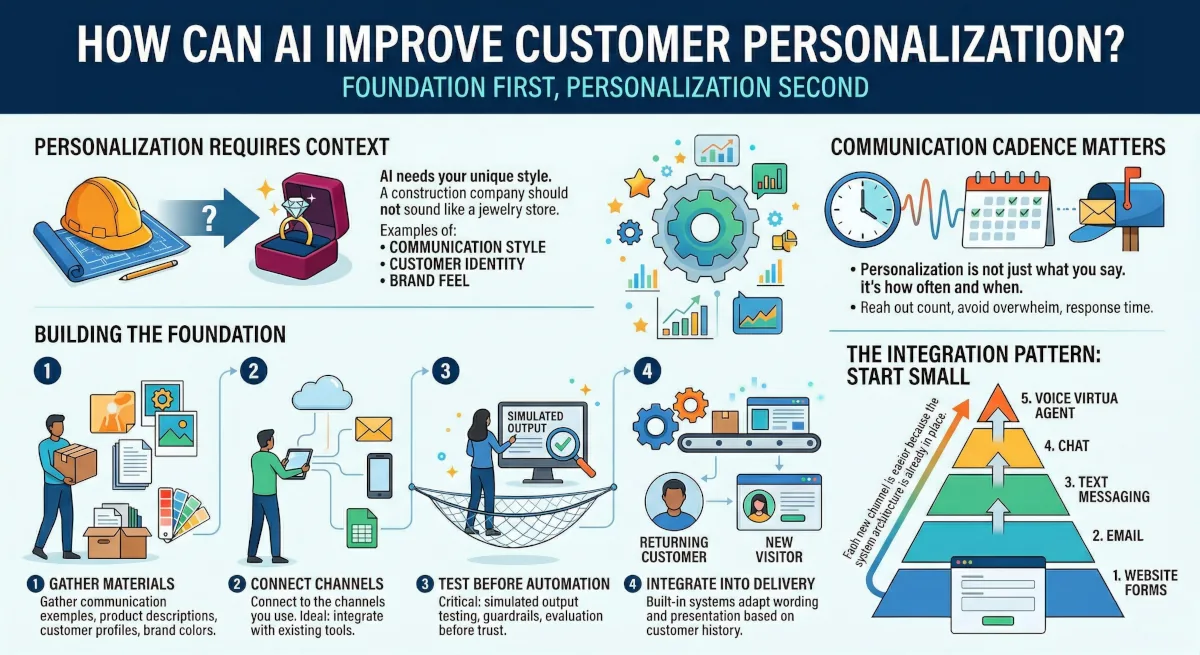
Personalization is the output the user sees, but the system underneath is what makes it reliable. AI needs your communication style, a clear picture of your customers, and your brand voice before its output sounds like your business. Then it needs testing and guardrails before it speaks for you. Start with one channel like website forms and expand as the foundation holds.
Personalization is the output. The system underneath is what makes it reliable. You need to get the foundation right before AI can personalize anything effectively.
What Personalization Requires
For AI to personalize communication or product presentation in a way that works for your business, it needs context. That means examples of your communication style, an understanding of who your customers are, and clarity on how your brand should feel.
A construction company should not sound like a jewelry store. The first step in any personalization effort is making sure the AI knows the difference for your business.
Building the Foundation
Step 1. Gather your materials. Collect examples of communication, product descriptions, how you position products in your market, who your customers are, and what language they respond to. Include your brand colors and visual identity if personalization extends to packaging or web content.
Step 2. Connect your communication channels. AI needs access to the channels you use to interact with customers. At minimum, provide a way to feed it the relevant information for on demand personalization. Ideally, integrate it with your existing tools.
Step 3. Test before you automate. If AI will produce personalized communication without human review, you need extensive testing of simulated output and guardrails that evaluate what's being produced. This step is critical. Without it, you're trusting a system to represent your brand with no safety net.
Step 4. Integrate into delivery. Does the wording change for returning customers? Does the presentation adapt based on whether someone is comparing you to a competitor? These capabilities need to be built into your systems, not bolted on after the fact.
Communication Cadence Matters
Personalization isn't just about what you say. It's about how often and when. How many times should you reach out to a customer? In the sales process, are you sending so much information they feel overwhelmed? How much time between their inquiry and your response is acceptable?
These questions are just as important as the content itself.
Tying Channels Together
Customer interactions need to tie into the same system for tracking and consistency. Channels to consider include website forms, email, text messaging through a business number, chat on your website, and voice communication through a virtual agent.
Start with website forms. The effort to build that creates the foundation. Then keep adding integration points into what you already have. Each new channel is easier than the first because the system architecture is already in place.
By the Numbers
71% of consumers expect personalized interactions from businesses, and 76% get frustrated when it doesn't happen
McKinsey Next in Personalization Report, 2024
Companies that excel at personalization generate 40% more revenue from those activities than average players
McKinsey Next in Personalization Report, 2024

Written by Duane Grey
AI Strategy & Implementation
Independent AI consultant helping companies cut through hype and deploy systems that produce real results.