Proposal to Release
Software Delivery
A structured methodology for taking an idea from first conversation to deployed, production-ready product. Proven across two client MVPs with 15+ development cycles.
Download PDF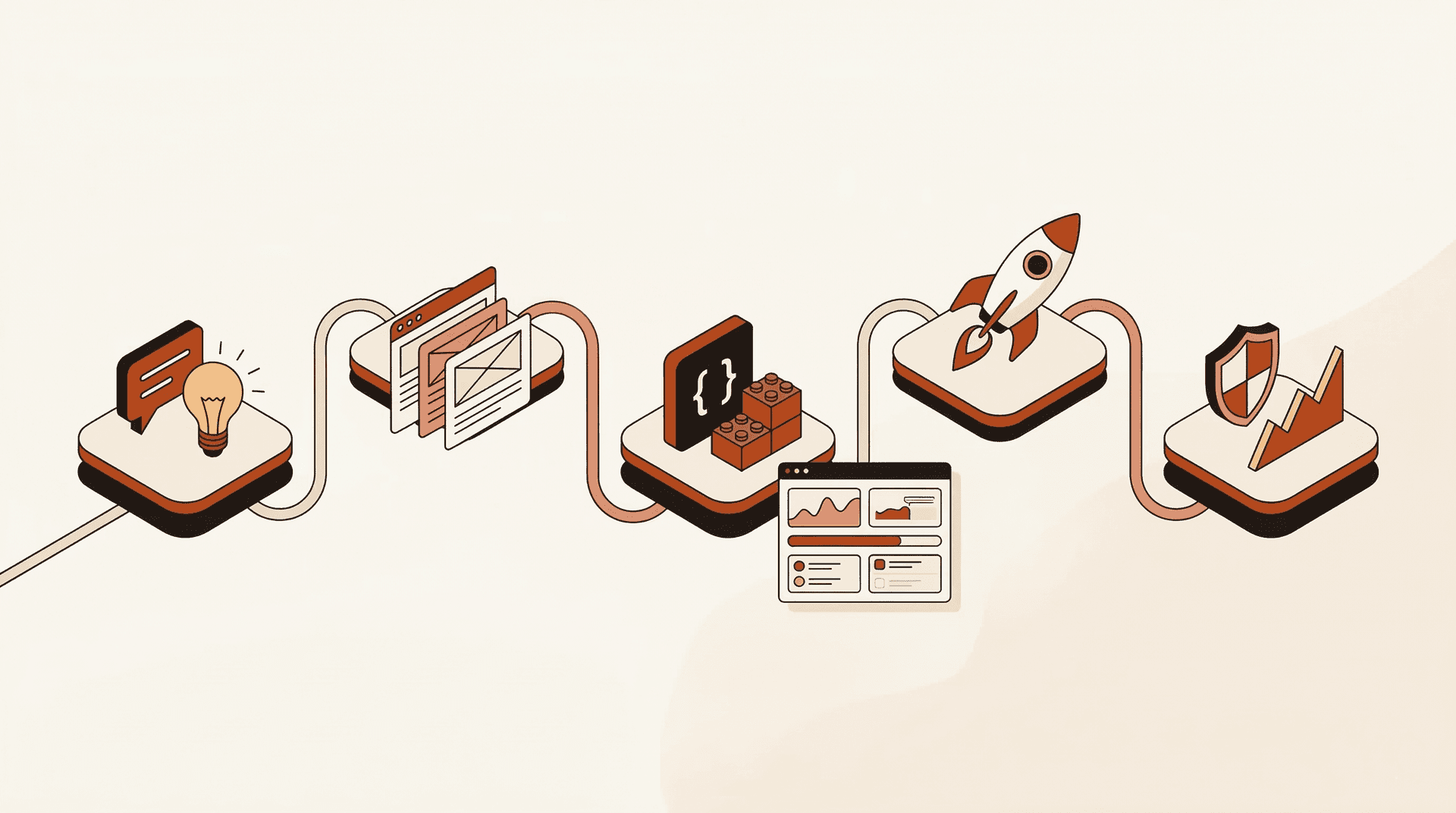
The Problem
The space between having an idea and having a live product is opaque. Traditional agencies give you a timeline and disappear. Solo founders do not know what they do not know: scope creep, missed requirements, deployment surprises. Most projects fail not because of bad code but because nobody managed the journey from concept to production.
The Approach
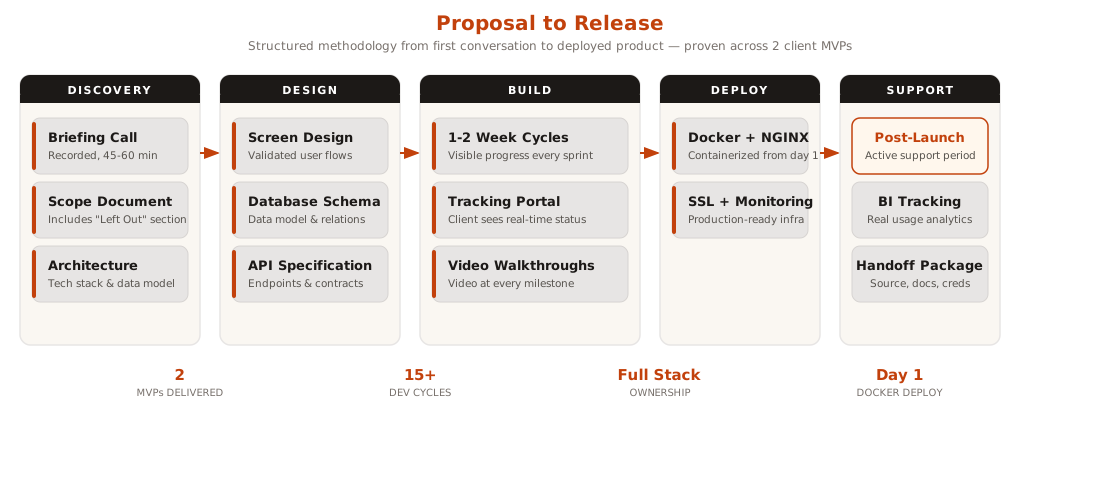
A gated lifecycle with clear milestones: Discovery validates the real problem, Design proves the solution before writing code, Build delivers in short visible cycles, Deploy is containerized from day one, and Support means actually being there after launch. Each gate prevents the next phase from inheriting problems.
Intentionally Left Out
This methodology intentionally excludes ongoing maintenance contracts and team scaling. It is optimized for the journey from zero to one: taking an idea to a working, deployed product. What happens after launch is a separate conversation.
The Solution
A five-phase delivery framework where each phase produces concrete, reviewable artifacts. The client never wonders what is happening because every phase ends with something they can see, touch, and approve. Beyond the build phases, the methodology handles what most freelancers improvise: communication protocols, change management, handoff packages, and post-engagement follow-up.
Technical Highlights
Tracking portal gives clients real-time visibility into cycle progress, deliverable status, and upcoming milestones
Docker-first architecture means the production environment is identical to development from the first commit
Milestone-based payment structure aligns incentives: you pay for delivered value, not elapsed time
The Results
The methodology has been validated across two real client engagements, each starting from a conversation and ending with a deployed, production-ready product. Both engagements used the full lifecycle: discovery through post-launch support, with change management, milestone reviews, and structured handoffs.
“I came in with an idea and Duane delivered everything, branding, logo, and a fully built MVP. Now I have a real product that anchors conversations about scaling into a larger platform.”
Lessons & Takeaways
Scope is a negotiation, not a document
The 'Intentionally Left Out' section is as important as the feature list. Agreeing on what you will not build prevents scope creep better than any contract clause.
Show progress weekly or lose trust
The tracking portal exists because clients need to see movement. A quick video walkthrough at every milestone takes minutes to record and saves hours of status update meetings.
Deploy on day one, not day last
Docker from the first commit means production is never a surprise. Every demo runs in the same environment the client will use. Zero deployment drama on launch day.
Change management is margin protection
Without a classification system, every small tweak quietly expands the scope. The change log makes the cost visible before it gets absorbed. Classifying requests by type (clarification vs. new feature vs. direction change) means both sides know what they are agreeing to before work starts.
Post-engagement is pipeline
The 7, 30, and 90 day follow-up cadence turns every completed engagement into future business. Testimonial collection, opportunity mining from transcripts, and pricing analysis from actual delivery data all feed back into the next proposal. The engagement ends but the relationship compounds.